


The degree programme is a face-to-face course. The courses usually take place on site as specified in the module catalogue and are also made available online. Each course is transmitted via our video conferencing platform using modern technology and a 360-degree camera. This means you can take part either in the seminar room or from home.
No, you can switch between attending the course in the seminar room and participating via the video conferencing platform at any time. Our hybrid format offers you maximum flexibility and freedom.
The hybrid curriculum allows you to study more flexibly, in particular to better reconcile your studies, family, career or health needs. It supports family friendliness, inclusion and allows you to personalise your studies.
There are only one face-to-face course per semester. The first week of the first semester takes place exclusively in presence at the university. During this onboarding week, you will get to know your fellow students, the lecturers, the degree programme, the hybrid study format and the campus.
The examination forms remain unchanged. Examinations are written at the university. Presentations, oral examinations and colloquia can take place online. Project reports, presentations and seminar papers do not require attendance at the university.
Thanks to our modern room equipment and 360-degree cameras, all participants are clearly visible and audible. The courses are didactically designed in such a way that you can also actively participate in discussions, group work and practical exercises online. During the onboarding process, you will receive clear instructions on how to use the technology and common rules for successful hybrid collaboration.
Marketing textbook, chapter 9
To ensure delivery quality, a bicycle manufacturer prints a television on its dispatch boxes.
The delivery service is an important aspect of distribution policy to ensure customer satisfaction. It goes without saying that goods that are damaged during transport to the recipient do not meet the delivery quality expected by the consumer. The Dutch bicycle manufacturer VanMoof also exports its exclusive, high-priced bicycles to the USA after they have been ordered via the webshop. Each bike is packed in a large cardboard box and shipped in it. However, American courier drivers are not very squeamish when it comes to bicycles, meaning that one in four bikes arrives at the customer defective. As a result, the defective bikes have to be returned to Europe at great expense and a new bike has to be dispatched. Can nudging (see From Science 3-8) solve the problem?
Obviously yes: the transport boxes for the bikes are very large. They have the same dimensions as the packaging for an incredibly large and expensive television. In the USA, a television is much more important and valuable than any bicycle. Vanmoof therefore had a television set printed on the boxes. Within a very short space of time, complaints in the USA fell by 80 per cent. The reason: American courier services intuitively pay much more attention to a packaged television during transport than to a packaged bicycle. However, this nudging effect is also having a positive impact in other countries.
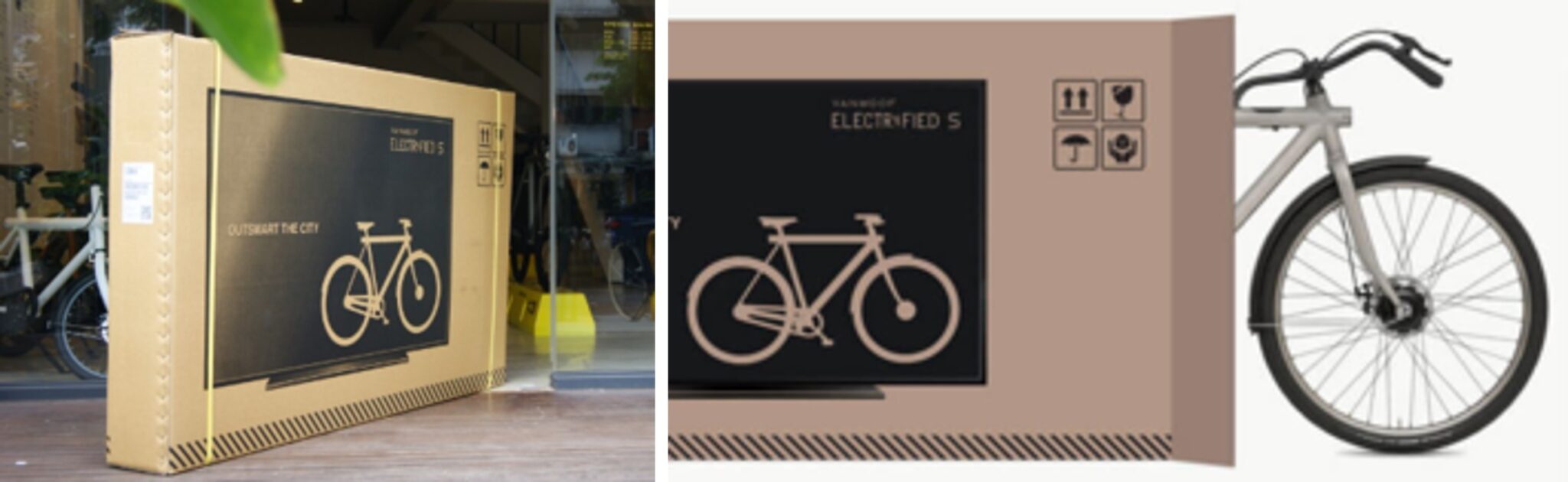
The illustration is divided into two parts to illustrate the concept:
Marketing textbook, chapter 9
Distribution policy Distribution policy → Physical distribution → Components and importance of the delivery service → Delivery time (chapter (9.3.2))
DHL trialled the delivery of urgent medicines to remote locations by parcel drone.
Logistics companies and internet groups such as Google and Amazon are developing and trialling the use of drones for parcel delivery. Even pizza delivery services are showing interest in using unmanned aerial vehicles to deliver orders. Companies are trying to use new technologies to organise the logistics sector much more efficiently, massively shorten delivery times and thereby increase customer benefits. In metropolitan areas, there are not only technical challenges but also very practical problems to be solved, e.g. in the public monitoring of automated air traffic, theft protection, economic efficiency or crash risks.
The logistics group DHL has therefore focussed on remote areas in order to test the use of parcel drones in pilot projects. To this end, DHL cooperated with RWTH Aachen University, which was responsible for the development, and the North Sea island of Juist, where the „Paketkopter“ ensured the emergency supply of urgent medicines to the island pharmacy. The advantage of using drones was that the delivery of medicines could be carried out at virtually any time, even in adverse weather conditions such as dense fog or darkness, in a short time and fully automatically over the distance of 12 kilometres between the mainland and the island, controlled by GPS. However, DHL had to register each drone flight to Juist individually, so the project was cancelled due to regulatory requirements and for cost reasons.
The last pilot project was carried out in 2018 under the name „Deliver Future“ with the Deutsche Gesellschaft für Internationale Zusammenarbeit and the drone manufacturer Wingcopter in Tanzania. The autonomously flying drone supplied the clinic on an island in Lake Victoria with medication from the mainland via fixed routes and took blood samples, for example, on the way back - all within 45 minutes on a route that can take up to six hours by car or boat.
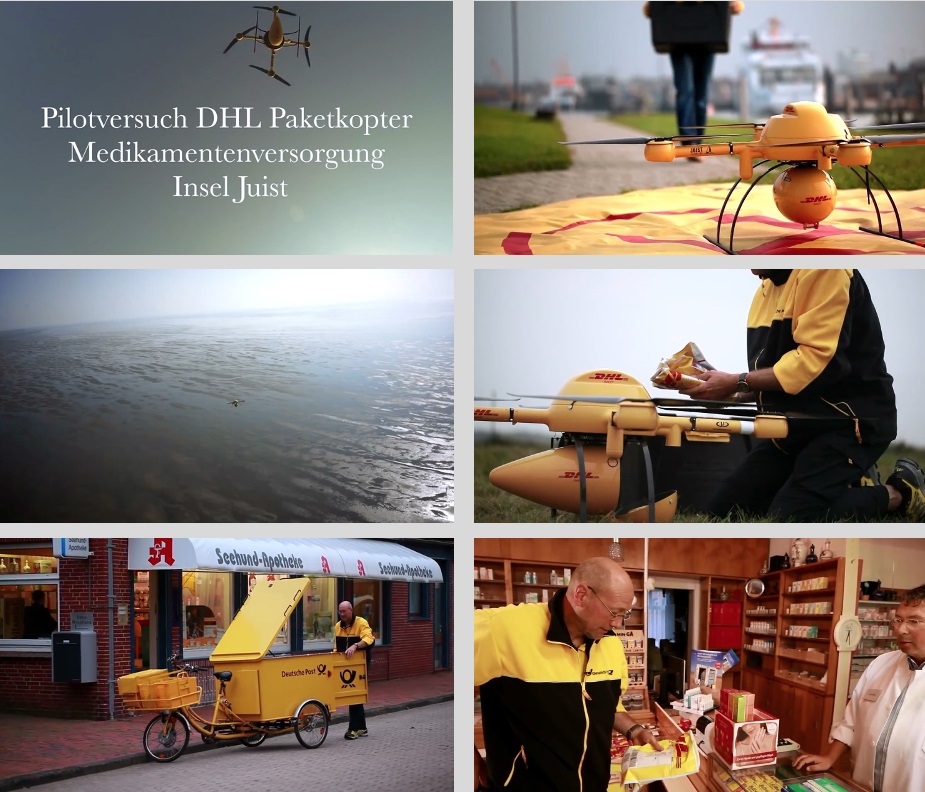
Photo series on the ‚DHL Paketkopter‘ pilot project: documentation of the autonomous delivery of medicines by drone from the mainland to the island of Juist.
The collage shows the drone logistics process in chronological steps:
Marketing textbook, chapter 9
Distribution policy → Acquisition-based distribution → Management of distribution channels → Organisation of distribution relationships (section 9.2.4.3)
In modern retail companies, space utilisation and product arrangement on the shelves are not left to chance. Retail marketing specialists have long been concerned with optimising the presentation of goods at the point of sale under the heading of „space management“.
The relevance of this becomes clear when you realise that around one in two people in the food trade go shopping without a shopping list and that customers only make many purchasing decisions at the point of sale (Franzen/Schäfer, 2009). The US retail giant Wal-Mart, for example, is known to operate its own research centre in which, among other things, the arrangement of goods in the shop and on the shelves is optimised. The aim is to increase the attractiveness of sales and shelf space, thereby making it easier for customers to find their way around and increasing their search satisfaction, triggering group and spontaneous purchases, reducing handling, capital commitment and space costs for retailers and taking appropriate account of the value of the various sales zones. Space management measures must be distinguished from the design of the shop atmosphere (shopfitting). Space management relates to the arrangement of the sales areas in the shop and the goods on the shelves, whereas shopfitting relates to design aspects (choice of materials, shelf design, lighting, use of colour, floor coverings, etc.).
Initial decisions relate to the utilisation of the available sales space. The space is divided into so-called functional zones, which essentially include the product group areas or departments as well as quiet zones, promotional areas and the checkout zone. When arranging product groups, the customer's search logic must be taken into account (e.g. baby food is not expected in the tinned food section, but rather in the other baby products according to need), which in turn has a positive effect on orientation and therefore also on shopping satisfaction.
The left-hand twist of the customer is also often taken into account by creating an anti-clockwise customer flow along the wall. On the other hand, the needs of retailers are of course also taken into account. In wide aisles and in the entrance area, promotional merchandise is often displayed or the path is blocked with merchandise tables to reduce the walking speed of customers. This ensures that the front product groups with irregular goods also attract attention. Goods for daily needs (e.g. bread, dairy products, sausage and meat) are usually located at the back of the shop so that customers have to pass through the other product groups in front, thereby increasing the likelihood of impulse purchases. Care should be taken to ensure that the customer does not perceive the distances in the shop as a loss of time, as this could lead to annoyance. To encourage combined purchases, goods that are consumed together can also be placed across different product ranges. An example of this would be a stand with wine right next to the cheese counter. For confectionery manufacturers, the checkout zone is particularly popular, where many impulse purchases are made while waiting. However, retailers also place goods here that either need to be supervised (e.g. cigarettes, spirits) or that are easily forgotten when shopping (e.g. batteries).
Other decisions relate to the placement of items on the shelf. The acquisition effect of the product arrangement depends in particular on the habitual buying behaviour of the customer, the attractiveness of the various product groups, the value of the shelf space and the number of front pieces of an article in the first row of shelves. The aim is to create shelf displays that promote sales. Optimisation tests have shown, for example, that impulse items should be placed at eye and handle height and magnetic items (well-known, high-demand products) should be placed in the peripheral zones to attract attention. The centre of the shelf receives the most attention, whereby a slight rightward orientation of the gaze must be taken into account. Weak areas can be found in the bend and stretch zones (see illustration). The arrangement of a product group (e.g. toothpaste) within a product range (e.g. body care) is usually vertical, i.e. different brands of toothpaste are arranged on the shelf from top to bottom, with toothbrushes, mouthwash and the like also arranged vertically. A horizontal arrangement (one shelf with toothpaste, toothbrushes below, mouthwash below, etc.) is not recommended, as this makes comparison difficult and does not take sufficient account of the value of the shelf zones. The number of front pieces (facing) is a matter of placement width and stacking height. Manufacturers aim to maximise the number of fronts on their products in order to increase contact performance. However, American studies have shown a rather weak correlation between placement width and sales. For example, 40 per cent of shelves with facings that are too wide are misplaced. In addition to the contact area, other factors such as pack design and size as functions of product design (see section 6.3.2.4) and the product type also play a role. For example, basic goods are purchased selectively, which leads to a low correlation between facing and sales, while this correlation increases for irregular goods. A vertical product arrangement is recommended, in which the product group is arranged vertically and the different brands of the product group are distributed across the shelf heights (e.g. brand A at the top, with the other brands below). In order not to jeopardise the sales-promoting properties of optimised shelves, shelf gaps must be avoided through continuous replenishment. Otherwise, customers may quickly get the impression that the shop offers too little choice.
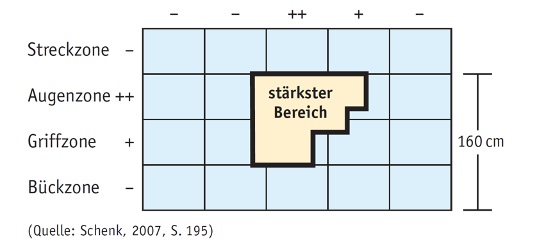
Schematic representation of the shelf zones (bend, reach, eye and stretch zones) with labelling of the area with the highest turnover at eye and reach height.
The illustration shows a grid that rates a shop shelf vertically and horizontally. The vertical zones are labelled and evaluated as follows:
Further details of the graphic:
Dimensions: A vertical line on the right-hand side marks a standard height of 160 cm for the eye and grip zone.
Strongest area: A central block, highlighted in yellow, marks the „strongest area“. It extends horizontally across the centre and vertically across the eye and grip zone.
Horizontal valuation: The horizontal plane is also rated at the upper edge. The centre is marked with ++ characterised, while the edge areas with - fall off.
To monitor the success of product placement, productivity figures (ratio of net profit to the number of square metres used), sales and contribution margins with regard to sales and shelf space, turnover rates and the popularity of articles („top sellers and bums“), handling costs and the probability and intensity of composite purchases are calculated.
Marketing textbook, chapter 9
Distribution policy → Acquisition-based distribution → Types of retail operations (section 9.2.3.2)
Korean grocer Home plus increased sales and market share without increasing the number of shops by bringing „shopping“ to the people.
In South Korea, Tesco's Home plus placed part of its product range virtually at bus stops and was thus able to increase its sales and market share compared to its biggest competitor (see From the field 9-8).
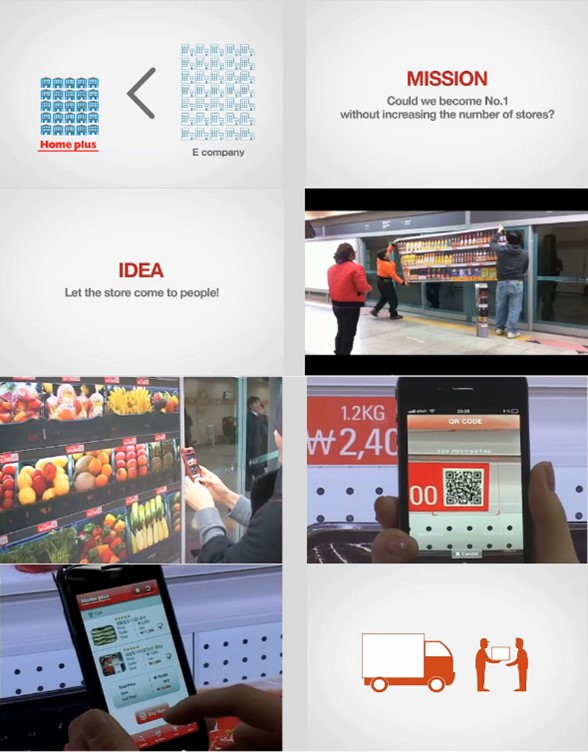
Photo series on the Home plus campaign in South Korea: Strategy for market leadership with virtual supermarket shelves in underground stations using QR code scanning and home delivery service.
The sequence of images explains the concept step by step:
Marketing textbook, chapter 9
Distribution policy → Acquisition-based distribution → Direct distribution channels → Company-owned distribution channels (section 9.2.2.1)
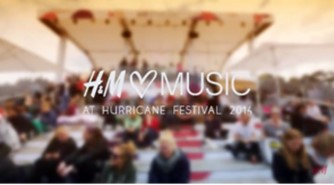
The Swedish fashion group Hennes & Mauritz installs pop-up stores at music festivals to strengthen brand loyalty in the direct environment of the target group.
The Swedish fashion group H&M uses the principle of pop-up stores and sells its „H&M Loves Music“ collection at festivals and open-air concerts worldwide via this type of sales outlet. For example, visitors to the Hurricane Festival 2014 were able to design their own textiles in an H&M pop-up store, get a professional make-up or a non-permanent tattoo in the „fresh'n'up area“, have photos taken and printed directly onto T-shirts in the „shoot'n'print area“ and buy the latest festival outfit in the „store area“. To complete the festival experience, guests could relax in the „H&M Loves Music Lounge“. This sales concept was also implemented in other countries, e.g. at the Afisha Picnic Music Festival 2014 in Moscow, the One Love Festival 2014 in Istanbul, the Roskilde Festival 2013, the Tomorrowland Festival 2013 in Boom, Belgium, and at other events in Montreal, Paris and other locations. In some cases, recycling campaigns are also included, where used clothing can be exchanged for new, sometimes individually designed pieces.
The distribution concept is combined with the promotion of up-and-coming artists or a festival sponsorship (see section 8.2.3.3). Depending on the design of a pop-up store, there can therefore be a close connection between brand communication and distribution, whereby in the case of H&M, the emotional festival experiences can also be transferred to the brand, thereby strengthening brand recall and brand loyalty.
Marketing textbook, chapter 8
Communication policy → Planning and decision-making processes for an advertising campaign → Designing the advertising message → Content aspects of ad design (section 8.3.7.2)
In brand communication, storytelling is currently regarded as a particularly effective technique for the emotional staging of brands (see section 8.3.7.2). The main reason for this is the importance of stories for our brain. The episodic codes of a brand, which are usually created with the help of commercials, are particularly effective at „touching“ consumers emotionally via the effect of mirror neurons, which is the basis for emotional brand loyalty.
The Hornbach DIY chain has been using storytelling in its brand communication for many years to vividly convey the Hornbach brand claim „There's always something to do“ for every hobby craftsman - even the less experienced ones. The topic of „successful craftsmanship by amateurs“ is presented in ever new, humorous and above all bizarre stories. The campaign „Every change needs a beginning“ is particularly impressive.
„The advert, directed by Spanish director Pep Bosch and shot in an Eastern European village, is reminiscent of a documentary. The ambience is romantic, almost poetic with nostalgic echoes (production: Trigger Happy Productions, Berlin). There is a narrator who tells the story of his village: Over the years, people have forgotten how to use their hands. The houses have fallen into disrepair. But one day, a gigantic nut appears out of nowhere. At first, the villagers can't do anything with the mysterious object. But suddenly a piece breaks out of the nut and reveals its interior: it is filled to the brim with tools. This marks the decisive turning point. The people rediscover their hands and all set about renovating their houses and gardens. The story is typical Hornbach: a little bizarre at first glance and yet it leaves plenty of room for interpretation. ‘With The Nut, we deliberately wanted to create room for manoeuvre, raise questions and create a myth that viewers could engage with,“ says von Bechtolsheim. The film will certainly attract attention in the advertising block because the documentary style represents a break from the mass of mainstream commercials. The music in the background is quiet and discreet, the message is conveyed clearly and comprehensibly - possibly more comprehensibly than was the case with some previous adverts."
Marketing textbook, chapter 9
Distribution policy → Acquisition-based distribution → Organs of the direct distribution channel → Organisation of the distribution channels (chapter 9.2.1)
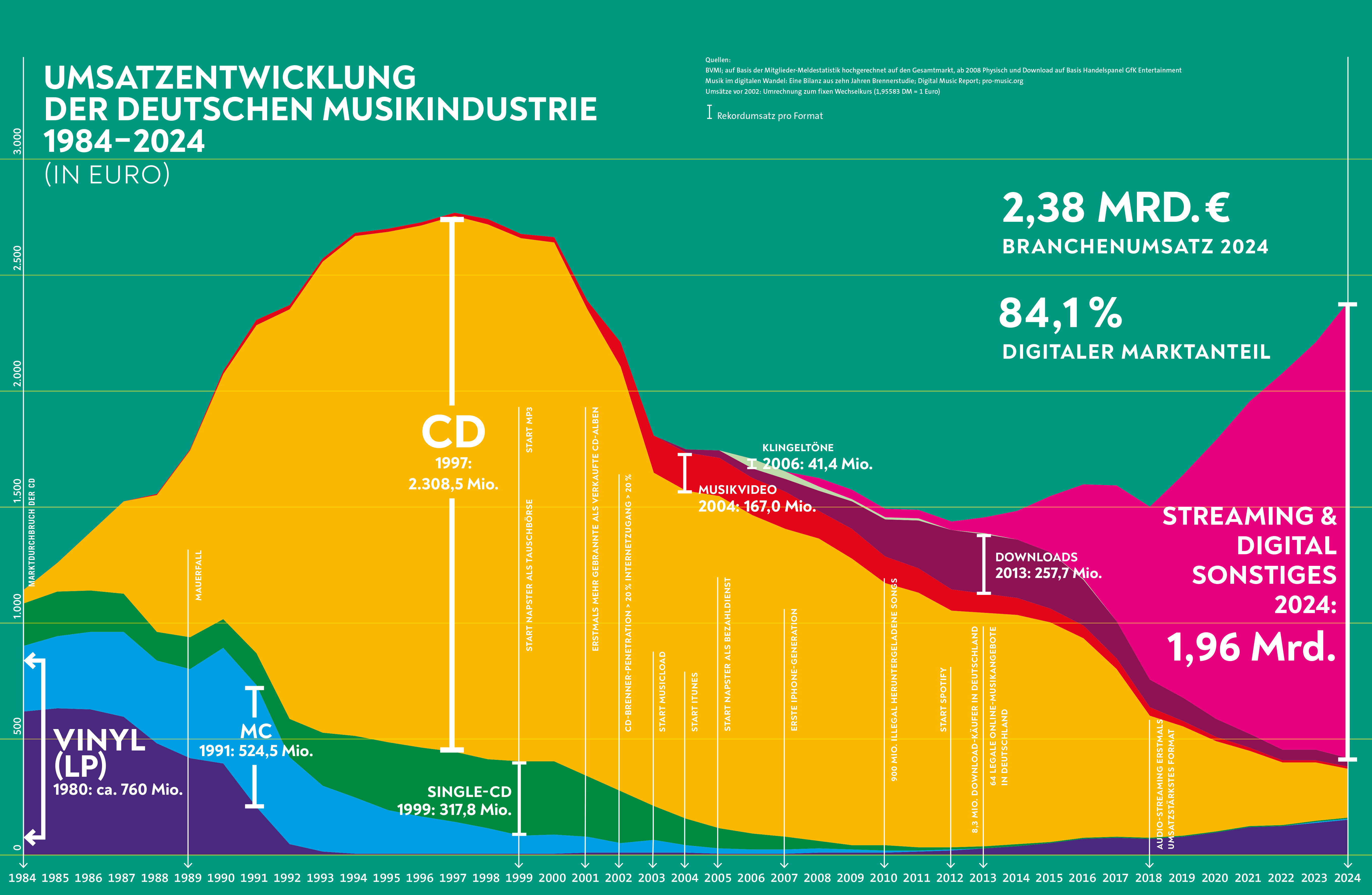
Digital music formats such as mp3 and streaming have changed the way music is used, so that the music industry has had to expand its distribution channels online in order to compensate for the decline in sales of traditional sound carriers.
The example of the music industry shows that the decision to expand differentiated multichannel distribution can also be necessitated by technological environmental conditions (see chapter 2.2). With the spread of the mp3 audio file format at the end of the 1990s, music consumption behaviour began to change. While music had previously been listened to primarily via physical media (e.g. music cassettes, CDs, records), the mp3 compression format made it possible to listen to and exchange high-quality music files that required little storage space without the need for traditional sound carriers. While the German music industry's turnover peaked at 2.3 billion euros in 1997 with CDs alone, CD sales declined steadily with the launch of illegal music sharing networks on the Internet and the increasing penetration of CD burners and Internet access in the early 2000s. Only reluctantly did the music industry attempt to compensate for the collapsing sales by cooperating with new online distribution channels (Musicload, iTunes Store since 2003/2004). Parallel to the legal fight against music piracy, a legal channel for purchasing digital music was also created. In 2024, sales of CDs in Germany totalled just 210 million euros, while sales in the digital business (downloads, streaming services such as Spotify) rose to over 1.8 billion euros, 93 percent of which was attributable to audio streaming thanks to broadband internet access (Drücke et al., 2025, p. 9; Tschmuck, 2021, p. 191 ff.). Technological developments therefore changed consumer behaviour and made digital distribution and thus further differentiation of multi-channel distribution necessary in order to generate more revenue (Arditi, 2020, p. 23).
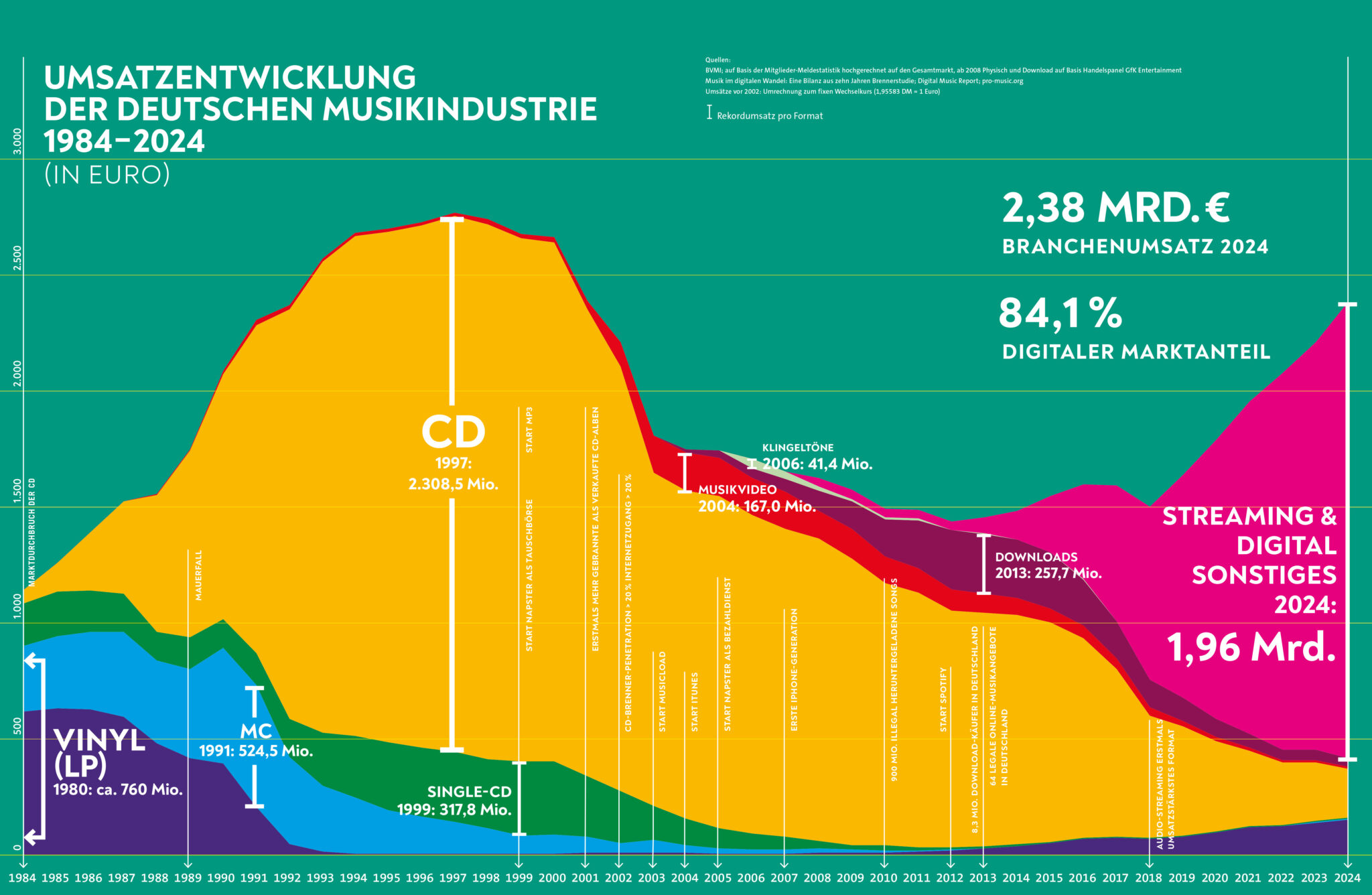
This complex infographic shows the change in music formats over four decades. Presented as a stacked area diagram, it shows the sales development of the German music industry (1984-2024) and thus the visualisation of the transition from analogue formats such as vinyl and MC through the CD era to the dominance of streaming and digital media in 2024.
The chart illustrates the massive structural change in the industry with colour-coded areas for the various sound carrier formats:
Milestones on the timeline: Important events are embedded in the chart, such as the fall of the Berlin Wall (1989), the launch of Napster as a file-sharing platform (1999), the launch of iTunes (2004), the first iPhone generation (2007) and the launch of Spotify in Germany (2012). 2018 marks the year in which audio streaming became the top-selling format for the first time.
Key figures 2024:
Revenue streaming & digital other: 1.96 billion.
Historical phases and formats:
Streaming & Digital Miscellaneous (Pink): This area will grow massively from around 2012 and will account for the lion's share of total sales in 2024.
Marketing textbook, chapter 8
Communication policy → Planning and decision-making process for an advertising campaign → Determining the advertising media and advertising materials → Selected advertising media (section 8.3.6.3)
In 2020, the Otto Group launched its most successful Christmas campaign since its market launch. In addition to traditional advertising on television and online video adverts, the company increasingly relied on DOOH (Digital-Out-Of-Home) adverts for this campaign.
As with Bahlsen, Weischer.JvB was responsible for the digital poster adverts in collaboration with the media agency bpn. The Christmas 2020 campaign was themed „Home Nights“ and was intended to emphasise that no matter „who“ or „how“ you spend Christmas with, the festive season has a home, and it is always your own. Due to the ongoing coronavirus pandemic and the resulting uncertain plans for Christmas, Otto was able to tap into current events and the minds of its target group.
In addition to attracting emotional attention, the campaign was intended to encourage consumers to buy; the digital display boards with real-time customisation in particular offered the appropriate incentive to buy. Tailored to the relevant target group, the screens could be adapted to current events, the weather, the time and the location of the digital display. With outdoor advertising alone, the company achieved 230 million contacts through innovative and dynamically customised advertising. Thanks to the DOOH adverts, an advertising recall of 44% was created among the target group and the company increased its brand awareness to 41% (cf. Weischer.media, 2020).
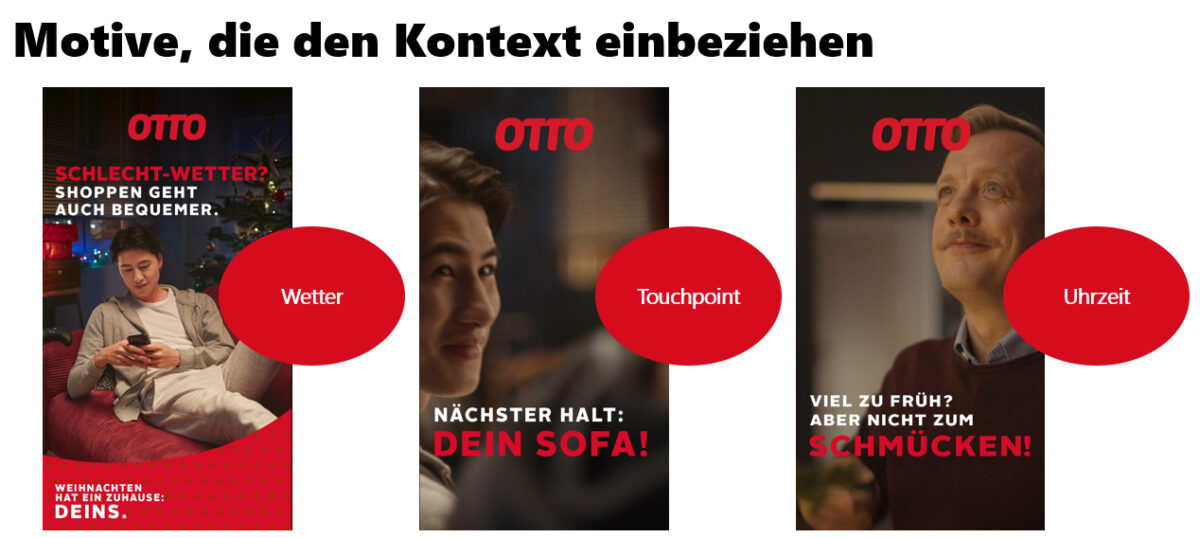
Three advertising motifs from OTTO to illustrate contextual marketing, based on the factors weather, touchpoint (location) and time.
The image shows three vertical advertising banners next to each other, each connected by a red oval with the corresponding context factor:
Marketing textbook, chapter 8
Communication policy → Communication policy instruments → Selection of communication instruments and integrated communication (section 8.2.5)
Brand relaunch as part of an integrated communication strategy for the HYPOXI brand. The comprehensive measures presented in the article were developed and realised by the Munich agency move communications.
Integrated communication refers to an approach in which all communication tools are harmonised with the aim of anchoring an unmistakable internal brand image in the minds of customers. Today, companies use numerous ways to communicate with their respective target groups (see section 8.2.4). Integrated communication has the task of harmonising the variety of instruments and measures used for internal and external communication in terms of content and form so that the brand message is communicated clearly and without contradictions. The communication campaign of the Austrian brand HYPOXI - world market leader for natural body shaping - has achieved this brilliantly. On the one hand, the consistent use of the central colour codes red and grey makes for a very good formal presentation of the communication media, while on the other hand this uniform appearance - in the sense of an advertising constant - also promotes recognition.
Marketing textbook, chapter 8
Communication policy → Communication policy → Communication policy instruments → Owned media communication instruments → Other communication instruments (section 8.2.3.5)
With a number of Trojan parcels, DHL has turned its competitors into involuntary advertising media for DHL's typical yellow colour and advertising slogan.
In several major cities in Europe and the USA, particularly large parcels were covered on the outside with a special thermal film that changes colour depending on the temperature. By cooling down to freezing point, the parcels were completely black on the outside when they were accepted by the competitors. Over the course of the delivery rounds, however, the boxes warmed up again in the vehicles and took on the typical DHL parcel design in yellow with the large and clearly visible red lettering „DHL IS FASTER“.
Because the parcels were light but very unwieldy, and also went to delivery addresses that were difficult to reach, the drivers from competitors such as UPS, DPD and TNT had to struggle with the advertising tours for DHL in the middle of the public eye. Upon arrival, the humorous to severely annoyed parcel carriers were filmed and the funniest scenes were then edited into a commercial for DHL. The idea for the perfidious advertising campaign was developed for DHL by the Stuttgart branch of the advertising agency Jung von Matt.
Marketing textbook, chapter 8
Communication policy → Communication policy → Communication policy instruments → Owned media communication instruments → Other communication instruments (section 8.2.3.5)
A small town in Upper Franconia became the scene of an unusual guerrilla campaign: activists turned a neo-Nazi march in Wunsiedel into a fundraising campaign for the drop-out organisation Exit - without the knowledge of the right-wing demonstrators.
In addition to the classic instruments of below-the-line communication (see section 8.2.3), there are other forms of communication that have in common that they achieve a great effect with only a small investment of resources (see section 8.2.3.6). Similar to guerrilla warfare, the aim is to achieve one's own communication objectives through atypical tactics and actions in the enemy's hinterland. A particularly characteristic feature of a successful guerrilla action is that a surprise effect is achieved at comparatively low cost with the largest possible number of people in order to achieve a high cost-benefit effect of communication. For this reason, such campaigns are often referred to as guerrilla communication. A particularly successful campaign from 2014 is presented below:
Every year, neo-Nazis march in the small town of Wunsiedel in Upper Franconia to hold a procession. The reason: from 1988 to 2011, the grave of Hitler's deputy Rudolf Hess was located here. Instead of organising a counter-demonstration as before, the activists of the „Right against the Right“ initiative simply turned the Nazi march into a fundraising campaign for the drop-out organisation Exit. The principle: for every metre covered by the 200 or so neo-Nazis, ten euros were donated by organisations or private donors to the drop-out organisation Exit. The surprise effect: the right-wing demonstrators naturally knew nothing about this. The whole thing was ironically staged with numerous structures along the demonstration route: Posters, banners and ground markings were put up, visually transforming the route into a sporting event: A notorious Hitler quote, for example, was translated into „Tough as leather! Nimble as greyhounds! And generous as never!“, while another banner read „If only the Führer knew“. Marching rations were also provided: Bananas were handed out under the poster reading „Mein Mampf“ („My chomp“). The guerrilla campaign raised over 10,000 euros in donations. The "Right against the right" campaign was also a complete success thanks to the professional realisation by the advertising agencies GGH Lowe and Grabarz & Partner: In addition to the attractively prepared campaign materials, there was a very well-designed website and a YouTube documentary. Numerous media from Germany and abroad reported on this exceptionally creative campaign. The agencies GGH Lowe and Grabarz & Partner (both Hamburg) were honoured with the Golden Lion and Silver Lion at Cannes Lions in 2015. And rightly so!
You are currently viewing a placeholder content from YouTube. To access the actual content, click the button below. Please note that doing so will share data with third-party providers.
More Information


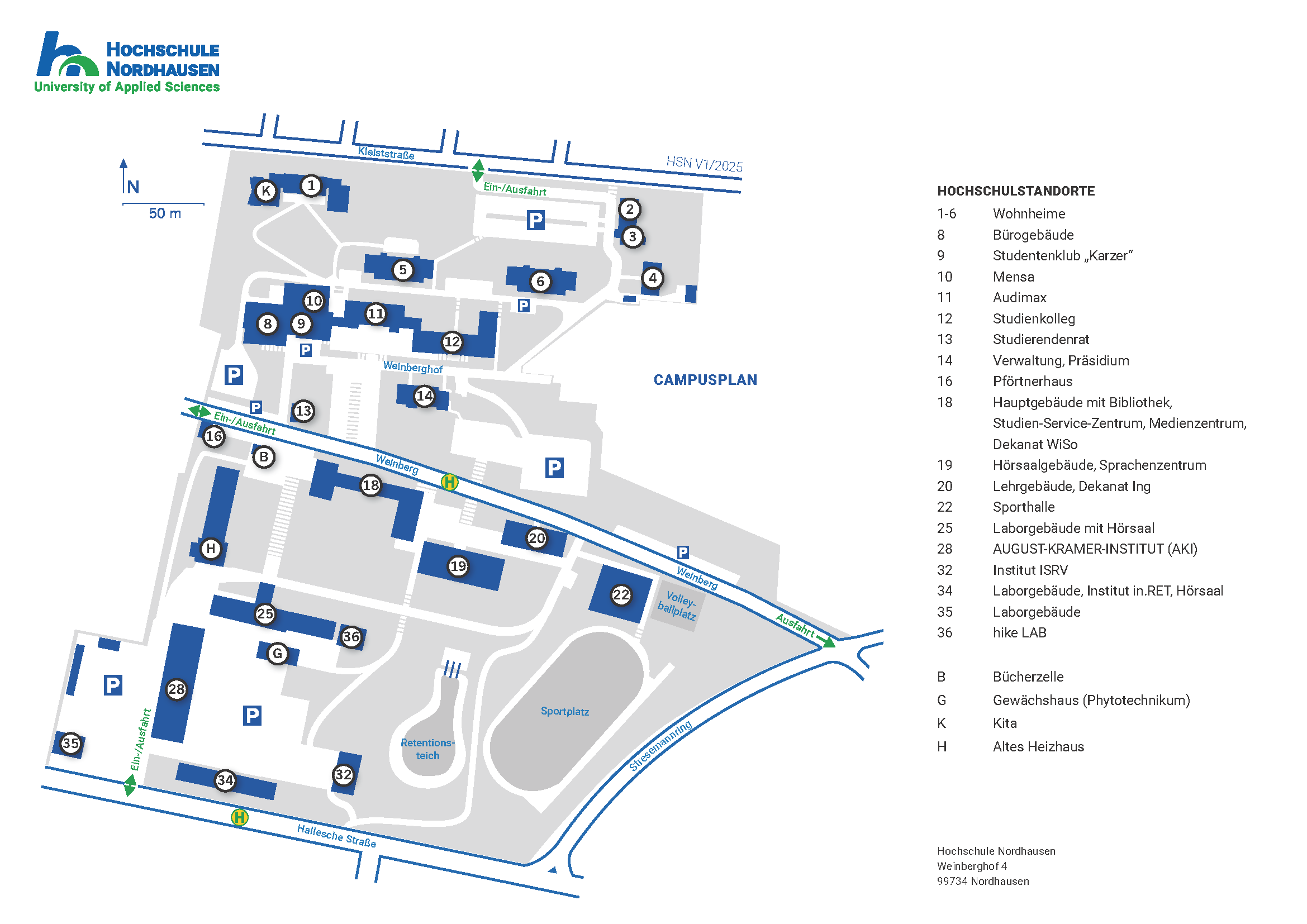
Study Service Centre
+49 3631 420-222
House 18, Level 1, Room 18.0105