


Posted on 25 June 2026
from
Tina Bergknapp
Choice of degree programme
Anyone interested in social management soon finds themselves asking a specific question: What exactly am I learning here – and how does this relate to my future career? We’ll answer that question straight away here.
Social management is deliberately structured in an interdisciplinary way. This means that you won’t be studying business administration or social work in isolation – instead, the course content is specifically designed to provide the combination of skills that social organisations need. A care home, a charity or a non-profit organisation needs someone who understands both the social tasks and structures involved, and who also knows how to manage an organisation efficiently and provide targeted guidance to staff in these settings.
The degree programme lasts seven semesters and leads to a Bachelor of Arts (B.A.). There are no entry requirements – there is no minimum grade requirement – and the programme has been running at Nordhausen University of Applied Sciences since 1998.
Fundamentals of Business Management for Social Organisations
In the first part of the degree programme, you’ll learn how social organisations operate from a financial perspective. That might sound a bit dry, but it isn’t – because the practical aspects of the social economy are always taken into account. For example, you’ll learn how a large social services provider or a care home draws up its annual accounts, how charitable organisations monitor their expenditure, or how budgets are planned in youth welfare services.
Specific topics: bookkeeping and financial reporting, cost accounting, finance and investment, management accounting.
Human Resources and Organisation
Social care organisations are labour-intensive – in the care sector, staff costs often account for 70–80 % of total expenditure. You will learn how teams are formed and managed, what legal frameworks apply to employment contracts, and how organisations are structured. This covers organisational theories as well as practical aspects of human resource management.
Social law, employment law and private commercial law
Anyone managing social care organisations needs to know which legal frameworks apply and what requirements must be met across the various social services. During the course, you’ll gain a structured overview of the Social Code (SGB), the law governing social care providers, benefits law, labour law and private commercial law, as well as the specific legal aspects of charitable organisations. This is not a law degree – but you will be able to contextualise legal issues and discuss them with experts on an equal footing.
Project management
Social projects – from opening a new advice centre to applying for funding – need to be planned, managed and documented. You will learn the key methods of project management and apply them in exercises to real-world issues in the social economy. A special feature of the course is the theory-practice project, in which you can develop your own ideas and, in some cases, put them into practice.
Quality management
Social care organisations are subject to statutory quality standards and are regularly inspected. During your degree, you will learn how quality management systems work in the social care sector, how processes are documented, and what quality development looks like in practice.
Communication, Public Speaking and Negotiation
Social management is not a desk job. You will need to communicate with staff, public authorities, funding bodies and clients. That is why communication, public speaking, conflict management and negotiation skills are integral parts of the degree programme – and are actively practised in seminar-based modules.
Social marketing and fundraising
Non-profit organisations cannot simply raise their prices when costs go up. They rely on grants, donations and public funding. During your degree, you will learn how fundraising works, how social organisations present themselves to the outside world, and how to write grant applications.
Empirical social research
Anyone who wants to design social services needs to know how to identify needs, problems and outcomes. During your degree, you will therefore learn the fundamentals of empirical social research: conducting interviews, developing questionnaires, analysing data and presenting findings clearly. This will enable you, for example, to plan user surveys, evaluate projects or use social data to inform decision-making in organisations and local authorities.
In the fourth semester, you’ll spend 20 weeks away from the university, working full-time at a social care organisation of your choice. That’s 800 hours of real-world work experience – not as an observer, but in an active role. Many students use the work placement semester to get to know their future employer. Some receive their first job offer afterwards.
During the semester, you’ll come to the university for what are known as ‘reflection days’ to share your experiences with other students and lecturers.
The practical workshop takes place as early as the first semester. You’ll visit local social services organisations – care homes, advice centres, youth support organisations – and analyse how these organisations operate: How are they funded? What is their legal status? How are they organised? This establishes a direct link right from the start between what you learn in the lecture theatre and what actually happens in practice.
The programme is designed as a full-time course and runs for seven semesters. It is a hybrid programme: all modules take place in person, but are simultaneously streamed via a 360-degree camera. This means you can take part from home if you are unable to attend in person – and switch between in-person and online attendance at any time.
Exams are held at the university. Presentations, written assignments and oral exams can also be completed online in some cases.
This degree programme will equip you to become a generalist with a wide range of skills – suitable for all areas where social and economic issues intersect.
You are currently viewing a placeholder content from Instagram. To access the actual content, click the button below. Please note that doing so will share data with third-party providers.
More InformationYou are currently viewing a placeholder content from YouTube. To access the actual content, click the button below. Please note that doing so will share data with third-party providers.
More Information


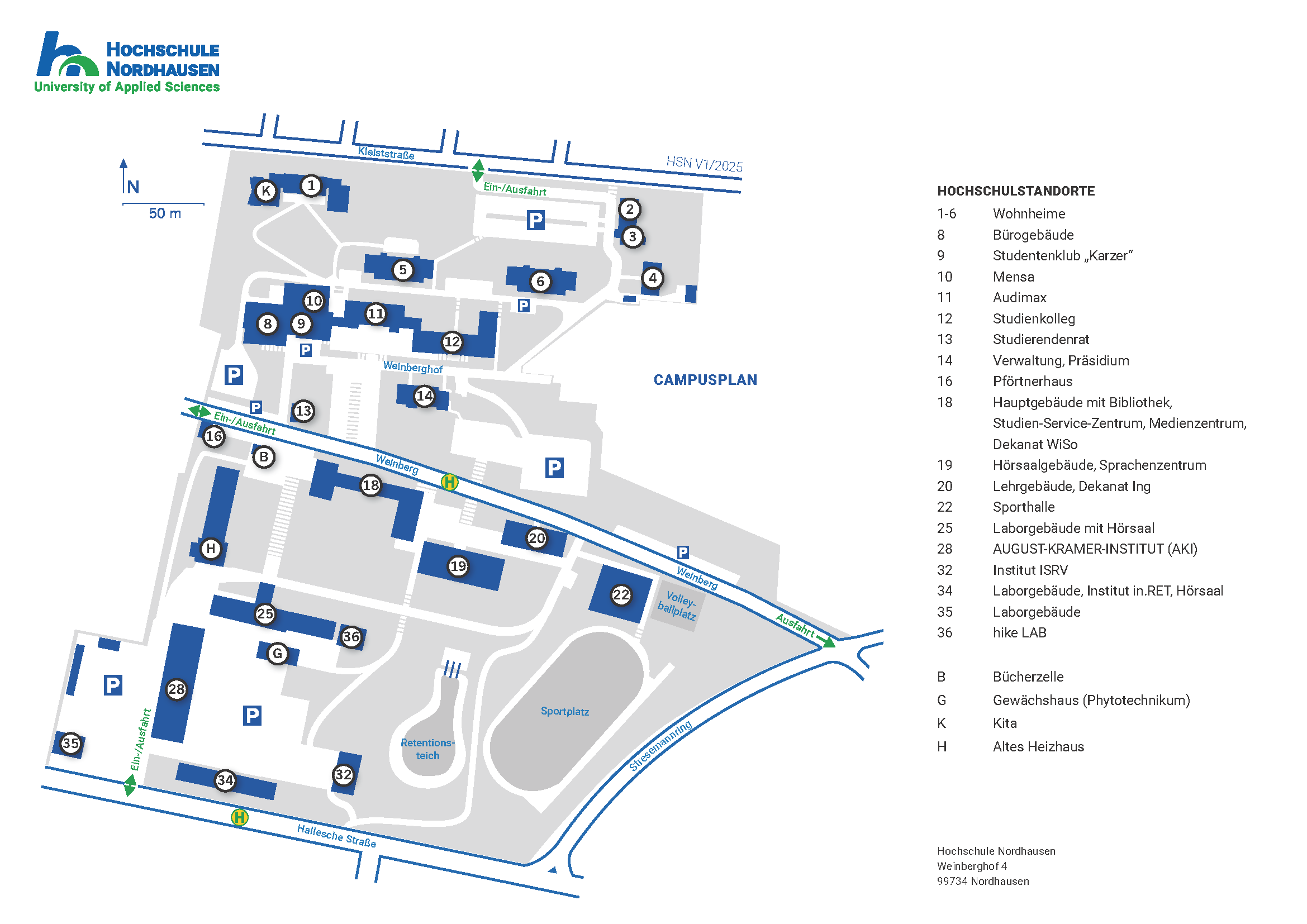
Study Service Centre
+49 3631 420-222
House 18, Level 1, Room 18.0105