

- General Examination Regulations for the Bachelor's and Master's degree programmes in Health and Social Work at Nordhausen University of Applied Sciences


FHI
Study with training or Bachelor possible!
...early help and inclusion?
The Master's degree programme in Early Intervention and Inclusion (FHI), which is unique in Germany, will start for the first time in the winter semester 2025/2026. It is the further development of the Transdisciplinary Early Intervention (TFF) Master's degree programme, which has been very successful for many years. It can be studied full-time, part-time and part-time.
In FHI, early help, early intervention and inclusion are understood as a joint concept. You will acquire in-depth and interdisciplinary knowledge about the prevention of developmental disorders, cooperation with parents and support for families at risk, among other things.
The degree programme is application-oriented and interdisciplinary. The focus is on acquiring a high level of practical problem-solving skills on a sound scientific basis. The combination of theory and practice, including in the areas of developmental psychology, developmental disorders, diagnostics, parent counselling, child protection and social law, prepares you optimally for the challenges in inclusive fields of activity.
The Early Intervention and Inclusion M.A. degree opens up numerous fields of activity and career opportunities for you in the areas of child and youth welfare, early intervention and inclusive educational institutions as well as at their interfaces and within the framework of projects. You are excellently trained to implement the concepts of inclusion, diversity and interculturality in the practice of daycare centres, early help and early intervention. They have the expertise to dovetail these fields of work in order to provide all children and their families with optimal developmental support. They think in an interdisciplinary and interdisciplinary way and are therefore perfectly placed to build up local networks and take a leading position in them.
The Master's degree also provides you with the basis for a further academic career, for example as part of a doctorate
| Study programme | Info |
|---|---|
| Short description: | FHI |
| Academic degree: | Master of Arts (M.A.) |
| Standard period of study / scope of services: | 5 semesters / 90 ECTS credits i |
| Teaching language: | German |
| Form of study: |
|
| Study start: | Winter term |
| Pre-internship: | not required |
| Application period Start of the winter semester: | 1 April - 15 September |
| Application period Start of the summer semester: | = Application period for the Suitability test: 15 November - 15 March
|
| Admission restriction: | none |
| Admission requirements: |
|
| Tuition fees: |
|
Would you like to provide the best possible support for children with special developmental needs and actively help shape inclusion? The Master's degree programme in Early Intervention and Inclusion (FHI) prepares you for precisely this task in a practical and interdisciplinary way. Here you will acquire sound knowledge of developmental support, child protection and social law - combined with the latest approaches to parent counselling and network design.
Whether in early intervention, child and youth welfare or inclusive educational institutions - with this degree you are ideally qualified to work in positions of responsibility.
Thanks to the part-time structure, flexible online teaching and intensive attendance phases, you can optimally combine your studies and career. Our Master's programme, which is unique in Germany, not only offers you scientifically sound content, but also direct opportunities for practical application.
Take the next step in your career and help shape an inclusive future!
In the application-oriented Master's degree programme in Early Intervention and Inclusion, you will acquire interdisciplinary specialist knowledge and practical skills.
The individual modules contain a wide range of teaching content at the interface between educational, psychological, medical, therapeutic and social and health science areas
You will acquire the following skills on the Master's degree programme:
Semesters 1-4:
Semester 5:


Professionals who are interested in the areas of early help and inclusion and are looking for an academic qualification with an interdisciplinary and application-orientated focus
Fields of activity and career opportunities (management tasks) in the areas of child and youth welfare, early help, early intervention and inclusive educational institutions as well as at their interfaces and within the framework of projects.
Master of Arts (M.A.), recognised postgraduate degree from a state university, opens up access to the higher civil service and entitles the holder to a doctorate.
The degree programme was assessed by ACQUIN and is accredited by the Accreditation Council without conditions until 30 September 2033: „The degree programme is rated as very good by the committee. Student-centred teaching and learning is very well facilitated. Students are very well equipped to pursue a qualified career.“
Regulations applicable to the degree programme (published in the Official announcements of the HSN) and other guidelines:
One child – many perspectives:
The ICF as a common language for early intervention, early support and nursery care
13 January 2027, 4.00–5.30 pm
Are you interested in early intervention, early help and inclusion?
Then Nordhausen University of Applied Sciences is the right place for you:
The Health and Social Studies programme has a focus on early intervention, early help and inclusion. These specialisms are essential for the holistic support of children and their families in the crucial first years of life.
Early intervention is a low-threshold support programme for children with (potential) disabilities, as well as preventative support for children with developmental delays or risks and their families. Early intervention is aimed at families with children from infancy until they start school. "With the parents for the child..." includes family-orientated work. By working closely with the families, you not only promote the development of the children, but also strengthen the resources and well-being of the entire family.
Early help, on the other hand, focuses on supporting families in challenging life situations. Here you will learn how to organise preventative measures and support services to promote the well-being of families and ensure the development of children.
For students in the Bachelor's degree programmes Curative education and Social work and health the elective subjects and theory-practice projects provide an exciting opportunity to familiarise yourself intensively with the areas of early intervention and early help during your studies and gain valuable experience.
Nordhausen University of Applied Sciences also offers a continuing education master's programme that is unique in Germany. Early help and inclusion to.
Take the opportunity to specialise in these important areas and make a positive impact on the lives of children and their families. We look forward to receiving your application and welcoming you to our university soon!
We will be happy to provide you with further information at any time:
If you do not yet have any experience in scientific work, we recommend that you attend the course to prepare for the aptitude test Scientific work:
It's easy to secure your place on your desired degree programme online!
Our Campus Management System HISinOne makes it possible: Simply upload all your application documents in PDF format to the corresponding fields in the online portal.
And if you still need to submit something, that is No problem! You can easily send missing documents by e-mail to our Study Service Centre:
Simply contact us at .
We know that student budgets are often tight. To help you finance your studies, we provide you with the following information at BAföG helpful tips on how to apply and ensure that your application is complete. You will also find important contacts there.
We want to support and encourage particularly talented and motivated students. Under Scholarships you will find information on various scholarship programmes. There are also other funding options, such as the "StudiumThüringenPlus" start-up grant, parental funding, child benefit and the opportunity to earn your own money through a student job.
Students in continuing education programmes can find all information on the Funding opportunities.
What is the difference between studying at a University of Applied Sciences (UAS) and at a „Universität“ (university)? At our University of Applied Sciences, you will receive much more support throughout your learning process than at a traditional university. We provide self-assessment questions to help you check your understanding, offer practical exercises to deepen your knowledge, and encourage a high level of interaction in lectures and seminars. This is very different from courses with more than 300 students.
You are currently viewing a placeholder content from Instagram. To access the actual content, click the button below. Please note that doing so will share data with third-party providers.
More InformationYou are currently viewing a placeholder content from YouTube. To access the actual content, click the button below. Please note that doing so will share data with third-party providers.
More Information


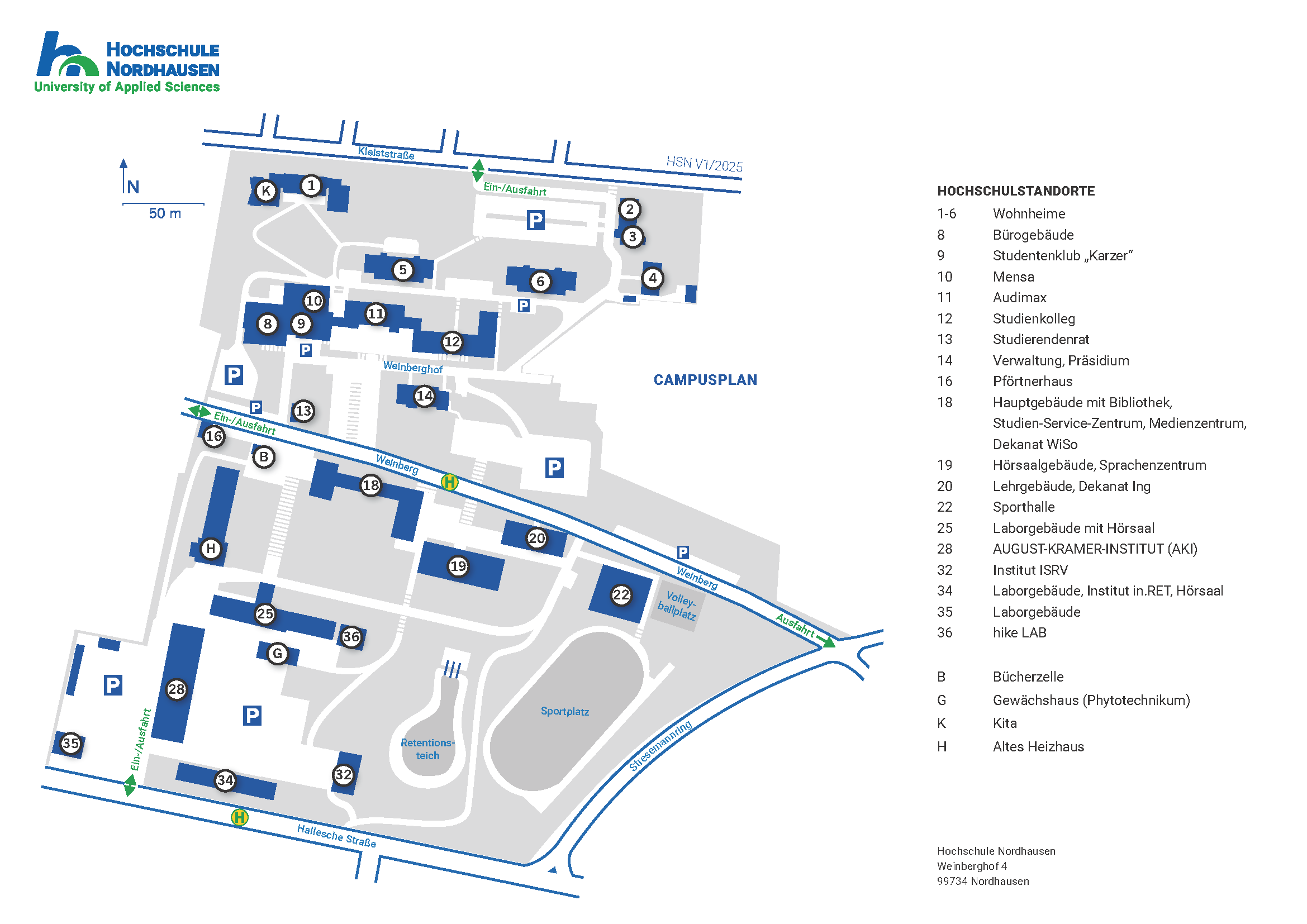
Study Service Centre
+49 3631 420-222
House 18, Level 1, Room 18.0105