


Below you will find a summary of some of the questions about the Master's degree programme in Public Management & Governance that are frequently asked by the student advisory service. If you have any further questions, we will of course be happy to answer them.
A consecutive Master's degree programme builds on the content of a professionally qualifying degree programme and serves to continue and/or expand it in an interdisciplinary manner.
Yes, for admission to the Master's degree programme in Public Management & Governance, the name of the academic degree from the first degree programme is irrelevant.
All compulsory courses on the Master's degree programme in Public Management & Governance are held in German. Only in the optional supplementary modules is it possible to choose English-language courses to a limited extent. For this reason, persons whose native language is not German and who have not completed their university entrance qualification or their first degree in German must provide proof of sufficient German language skills for admission. Proof can be provided by a DSH-2 certificate (German Language Examination for Admission of Foreign Students) or level 4 in each skill in the „German as a Foreign Language“ test (TestDAF), a pass in the „German“ section of the assessment test at preparatory colleges or a German Language Diploma (Level II) from the Standing Conference of the Ministers of Education and Cultural Affairs (DSD II). A telc certificate German C1 is also recognised.
No. As this is a consecutive Master's degree programme, there are no tuition fees. However, long-term tuition fees of 500.00 euros/semester must be paid if you exceed the total standard period of study for the first degree programme and the consecutive Master's degree programme. Further details and special regulations can be found in the Thuringian Higher Education Fees and Charges Act (ThürHGEG). You will also have to pay a fee of 95.00 euros/semester for the Studierendenwerk, 5.00 euros/semester for the student body and 208.80 euros/semester for the Deutschlandticket, i.e. a total of 308.80 euros/semester (as of summer semester 2026). For the first semester, there is an additional one-off charge of 20.00 euros for the Thuringian Student Union Card Thoska, unless you already have one from your previous studies.
Please apply online. Submit the required documents to the Study Service Centre at Nordhausen University of Applied Sciences. This is possible until 28 February (if you are starting in the summer semester) and until 31 August (if you are starting in the winter semester). If you fulfil the admission requirements, you will then receive a letter of admission authorising you to enrol as soon as you have paid the fees for the first semester. If you have to complete bridging modules, this will be indicated on the letter of admission.
Yes, this is possible. If it is expected that you will fulfil the admission requirements, you will receive a letter of admission subject to the fulfilment of the admission requirements. You can then enrol as soon as you have paid the fees for the first semester, but must then prove that you have fulfilled the admission requirements by 31 December (for enrolment for the winter semester) or 30 June (for enrolment for the summer semester). If you are enrolled at Nordhausen University of Applied Sciences, you may already attend the courses of the Master's degree programme.
In accordance with international requirements, 300 ECTS credits are required for a Master's degree, including the previous degree programme. These are usually acquired through a combination of degree programmes with standard study periods totalling ten semesters (30 ECTS credits/semester). The Master's degree programme in Public Management & Governance comprises a study volume of 90 ECTS credits. If you have previously earned fewer than 210 ECTS credits - this usually applies to graduates of degree programmes with a standard period of study of six semesters - the missing ECTS credits must be earned through bridging modules.
As a rule, you can choose the bridging modules from the wide range of our degree programmes according to your interests. It is only not possible to choose modules as bridging modules that are already covered by your previous degree programme.
If you are studying according to the study option for graduates of a first degree in administration, economics, law or social sciences and have earned fewer than 10 ECTS credits in business administration content from the fields of human resources, organisation, investment, financing, accounting, controlling and/or management, you can be admitted on condition that you make up the corresponding modules as part of the bridging modules or as part of the supplementary modules of the Master's degree programme.
If you are studying according to the study option for graduates of a first degree programme in administration, economics, law or social sciences and have earned fewer than 10 ECTS credits in the field of public law, you can be admitted on condition that you make up the corresponding modules as part of the bridging modules or as part of the supplementary modules of the Master's degree programme.
Yes, this is possible. If, after your first professionally qualifying degree programme, you have acquired knowledge and skills through a professional activity that go beyond those that were to be acquired as part of the first professionally qualifying degree programme, then they can be credited to the required bridging modules.
To do this, you need to write a report describing the content of your professional activity and the knowledge and skills you have acquired as a result. Please read the guidelines published by the German Rectors' Conference beforehand Practical formulation of learning outcomes and use the taxonomies presented therein to describe your learning outcomes precisely. Your report should be confirmed by your employer; alternatively, confirmation by a meaningful work reference can be considered. The examination board will then assess the extent to which the knowledge and skills acquired outside of higher education correspond to the scope of the Bachelor's degree programme.
Before you prepare the report and submit an application for credit transfer, it is best to seek advice from the Dean of Studies.
You will be enrolled on the Master's degree programme when you start your studies at Nordhausen University of Applied Sciences. You can already complete modules on the Master's degree programme from the first semester. You complete the bridge modules until you register for the Master's thesis. If you have to catch up on bridging modules worth 30 ECTS credits (especially if you only gained 180 ECTS credits in your first professionally qualifying degree programme), you will generally need four semesters to complete the Master's degree programme. Individual bridging modules can usually be completed „on the side“ without extending the duration of your studies (with „overtime“, of course).
The Master's degree programme opens up access to the higher civil service and is therefore equivalent to Master's degree programmes at universities in this respect. However, „access to the higher civil service“ should not be confused with a „career qualification“, as can be obtained, for example, as a result of completing our Bachelor's degree programme in Public Business Administration/Public Management or our Bachelor's degree programme in Digital Administration Management for the higher non-technical civil service. While the two practical semesters in the Bachelor's degree programme correspond to the preparatory service and the Bachelor's examination can replace the career examination for the higher non-technical administrative service, a preparatory service (administrative traineeship) and a career examination would have to be added to the Master's degree programme in order to obtain the „career qualification for the higher civil service“. However, after completing the Master's degree programme, employment as an employee in a pay grade corresponding to the higher civil service (EG 13 TVöD/TV-L) is possible, as well as subsequent appointment as a civil servant. The federal and state governments have made different regulations for their respective areas of responsibility. It is usually possible to become a civil servant after two and a half or three years of employment at the higher civil service level.
You are currently viewing a placeholder content from Instagram. To access the actual content, click the button below. Please note that doing so will share data with third-party providers.
More InformationYou are currently viewing a placeholder content from YouTube. To access the actual content, click the button below. Please note that doing so will share data with third-party providers.
More Information


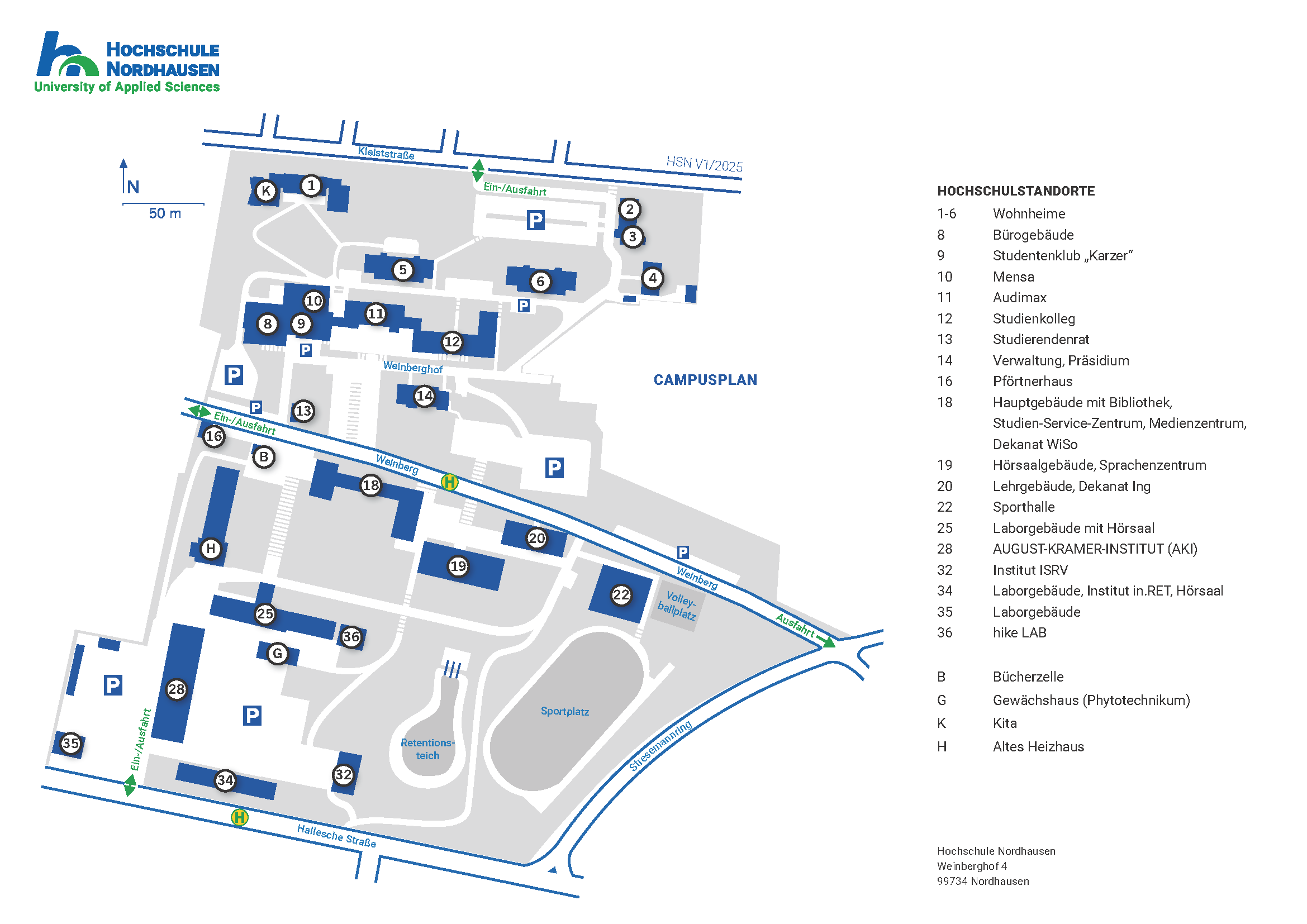
Study Service Centre
+49 3631 420-222
House 18, Level 1, Room 18.0105