


Under the direction and with the significant participation of Thuringian partners, the ambitious project of the recyclable materials turnaround consists of various packages of measures that are being pursued as part of an overall strategy. This is based on the global trend of resource scarcity, which, especially for economically strategic raw materials such as rare earths, is still almost exclusively obtained from primary sources. For this reason, it is particularly important for resource-poor countries such as Germany to become less dependent on imports and increasingly rely on secondary sources from waste.
Nordhausen's work is based on the current research project "Recycling 2.0 - Die Wertstoffwende" - Forum, in which Nordhausen University of Applied Sciences is collaborating with renowned partners in the field of recycling throughout Germany. This project was made possible by the intensified research activities of Nordhausen University of Applied Sciences in recent years within the GreenTech research focus. In addition to purely technical aspects, the interface with citizens plays an enormously important role, as their consumer behaviour has a significant influence on the quantity and composition of waste.
The intention is to conduct even more intensive research in the future, further expand the cooperation network and pool expertise in the field of recycling under the umbrella of a Thuringian recycling centre.
The focus of this year's contribution by Nordhausen University of Applied Sciences and Arts to the 2016 Hanover Fair was the recyclables revolution. By analogy with the energy transition, this is a development process that aims to secure and sustainably organise the supply of raw materials in Germany as a high-tech location.
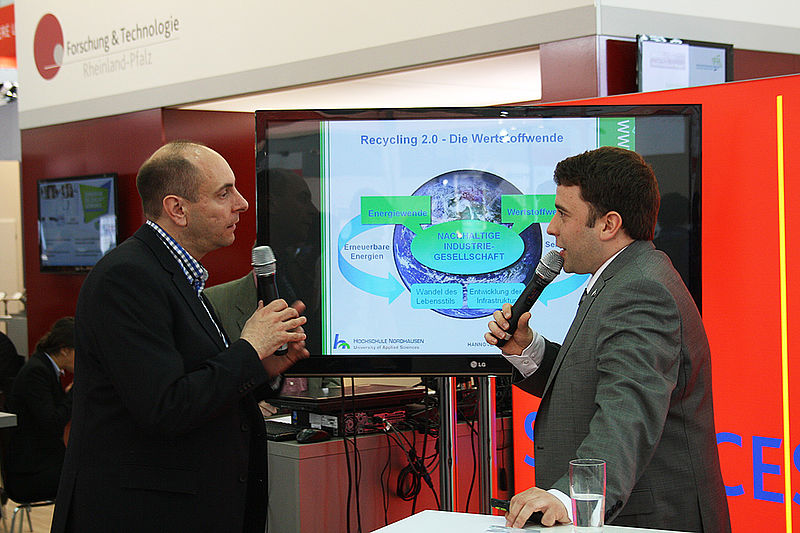
Mr B.Eng. Andreas Glimm from Nordhausen University of Applied Sciences (talking about Science Square) presents the recycling revolution
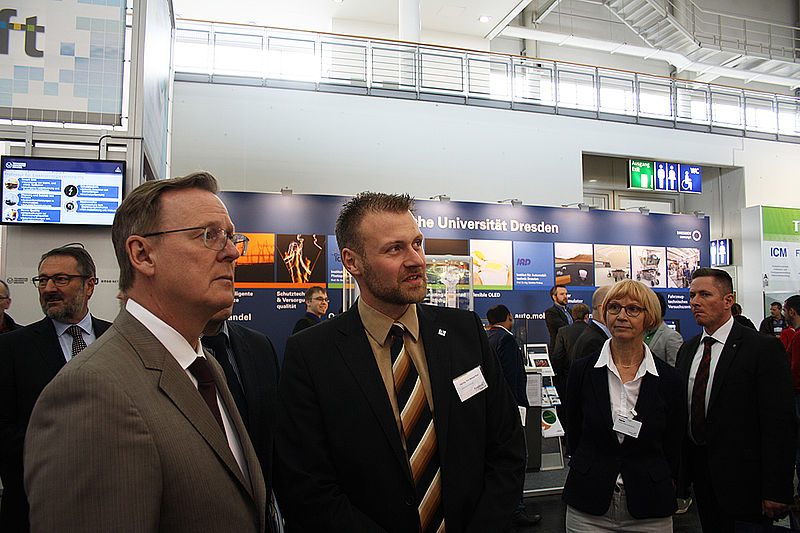
Dipl.-Ing. (FH) Michael Rutz from Nordhausen University of Applied Sciences in conversation with the Thuringian Minister President Bodo Ramelow


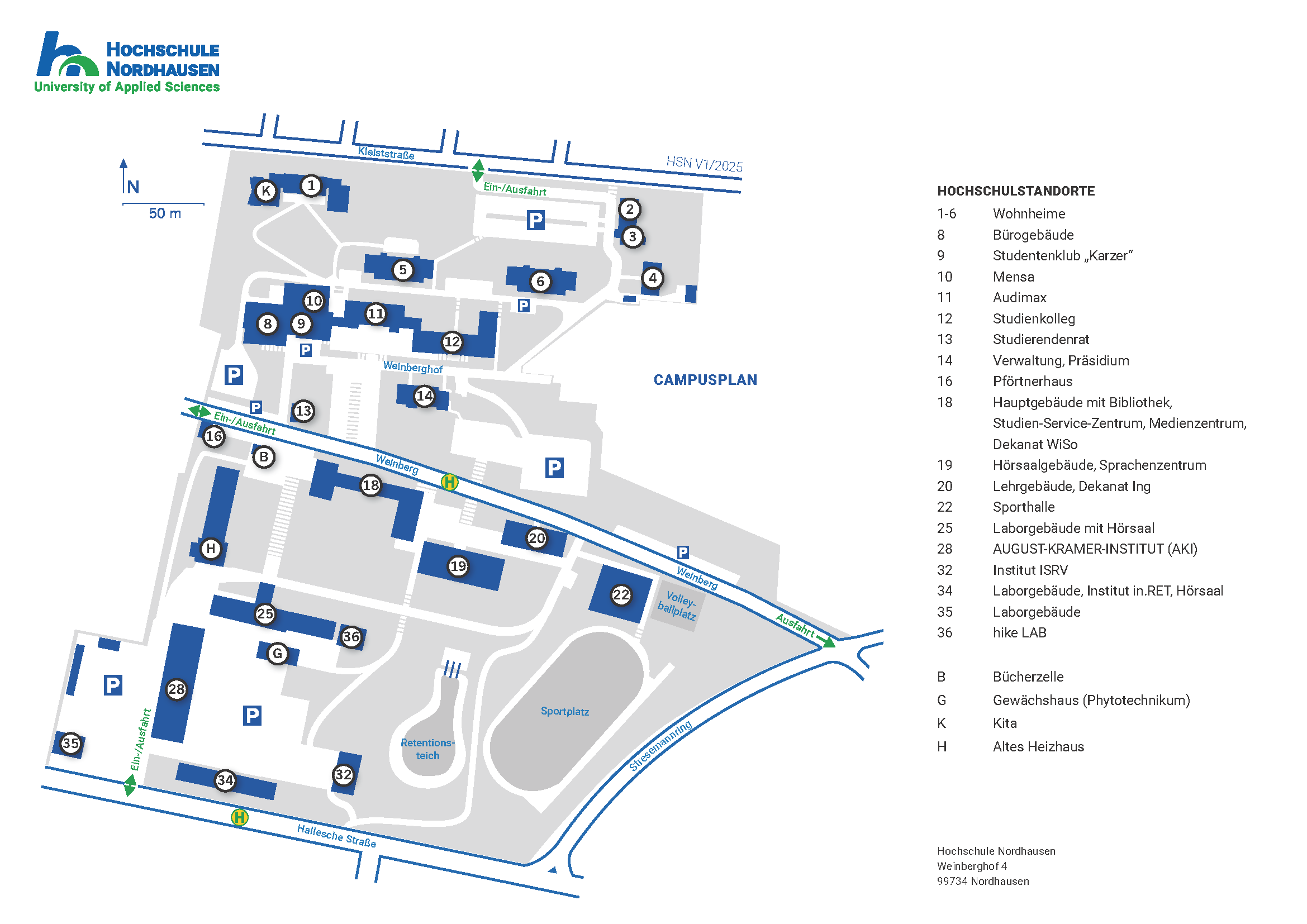
Study Service Centre
+49 3631 420-222
House 18, Level 1, Room 18.0105