


On 26 February 2026, the regional conference for language teaching at Thuringian universities took place at the Language Centre of Nordhausen University of Applied Sciences (HSN). This continued a long-standing tradition of regular dialogue on university language teaching at local level, which is intended to promote networking and discourse on state-specific topics. As the host institution, the SPZ of Nordhausen University of Applied Sciences offered a programme of lectures and workshops on new teaching and examination methods in the context of AI as well as special trends and developments with a view to an increasingly international student body in Thuringia.


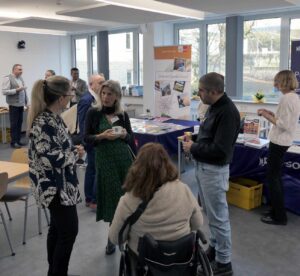


Alexandra Aberle, Head of the Language Centre at Nordhausen University of Applied Sciences, opened the event with a warm welcome and expressed her delight at the large number of guests, lecturers from Erfurt, Jena, Ilmenau and Schmalkalden. After a welcoming address by Professor Cordula Borbe, Vice President for Studies and Teaching at HSN, Professor Alexander Dotsenko (HSN) gave the opening lecture, which focused on the connection between the latest AI developments and their significance for modern university teaching. The guest speaker painted a thoroughly optimistic picture of the usefulness of digital processes in the acquisition of knowledge. In particular, he pointed out that artificial intelligence has the potential to intuitively adapt to human needs and deficits. He therefore concluded that the bridge between artificial intelligence and modern university teaching can be successfully built.
The topic of AI also dominated one of the first workshops in the conference programme, in which Katrin Josephine Wagner and Christine Röll (HSN) discussed learning and examination formats in the age of artificial intelligence with the language teachers present. The focus here was particularly on authentic and activity-orientated examination scenarios. Tracy Biedermann (University of Erfurt) emphasised the workshop character of the event with a hands-on presentation on the creation of case studies in language teaching using ChatGPT. After a brief introduction, the participants worked in groups to develop typical teaching scenarios based on the input of prompts in the AI. The results impressively illustrated that artificial intelligence can be a useful and efficient tool for lesson planning.
At the same time, Andrew Pecchia (HSN) dealt with language learning programmes beyond formal teaching structures in the workshop „Extracurricular offers to promote language skills“. In numerous examples from his own wealth of experience, Mr Pecchia reported on book clubs, English film evenings, tandem events and the organisation of themed evenings with a particular focus on the large number of international students. As a positive conclusion, the workshop participants realised that such offers in the form of online events could also be possible beyond university boundaries and within the network of Thuringian universities. It will be exciting to see what develops from this idea.
In the first afternoon workshop, Dipl.-Ing. Bernd Aberle (Geotechnik Aberle) gave exciting insights into aspects of language acquisition and language use as an engineer in international projects and teams in his presentation „Why English Matters!“. He gave practical and entertaining examples of what everyday working life can look like on major construction sites around the world with a variety of cultural and linguistic countries of origin. This practical relevance provides valuable insights into the factors that professional and specialised language teaching should take into account in order to prepare students for future work situations in an action-oriented way. In the second part, Ulrich Schuknecht (EAH Jena) reported on technical language aspects of writing in business English and once again touched on the aspect of AI in this context.
The parallel event on „Current challenges and teaching German as a foreign language“ reflected the growing need to discuss the challenges posed by a sharp increase in the proportion of international students. Conducting lessons and examinations in this area demands a high level of teaching and organisational skills from all those involved, which were discussed in the workshop in a lively exchange of experiences. Alexandra Aberle and Franziska Koppe (HSN) opened the exchange of experiences with the teachers present with keynote speeches on the linguistic and organisational challenges. In addition, Sandra Schönstedt, representing the Study Service Centre (HSN), provided insights into university administration with a focus on the particularities of international students.
The Language Centre at Nordhausen University of Applied Sciences can look back on a successful regional meeting and is pleased and happy that the guests attested to the event's valuable exchange of experiences and successful organisation. The participants agreed that the tradition of organising regional meetings should be maintained and continued in the near future.


You are currently viewing a placeholder content from Instagram. To access the actual content, click the button below. Please note that doing so will share data with third-party providers.
More InformationYou are currently viewing a placeholder content from YouTube. To access the actual content, click the button below. Please note that doing so will share data with third-party providers.
More Information




Study Service Centre
+49 3631 420-222
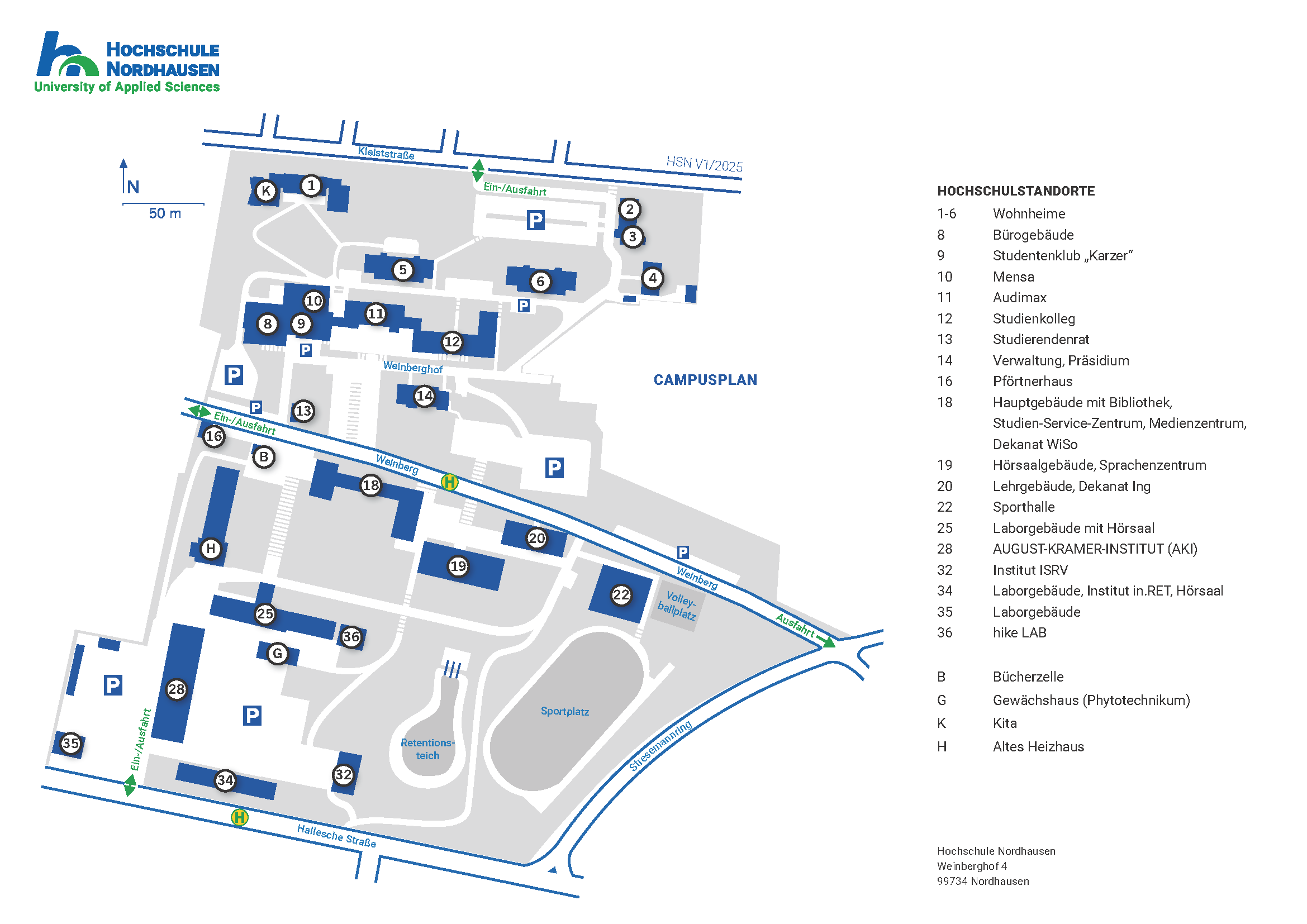
House 18, Level 1, Room 18.0105