



On 1 November 2020, Nordhausen University of Applied Sciences launched the "PolyGips" research project, which is being carried out together with the joint partner K-UTEC AG SALT TECHNOLOGIES from Sondershausen. The project focuses on the extraction of gypsum products from calcium sulphate-containing processing residues from potash production in the Südharz-Unstrut region. The research project aims to expand the value chain in potash salt mining.
The challenge lies in the complex treatment process required to extract the calcium sulphate. The aim of the project is to generate a calcium sulphate product that can ultimately be used in the gypsum industry and thus contribute to reducing the FGD gypsum gap. According to the Federal Institute for Geosciences and Natural Resources, technical gypsum from the flue gas desulphurisation of coal-fired power plants (FGD gypsum) has so far covered around half of domestic gypsum demand (approx. 10 million tonnes). The gradual phase-out of coal-fired power generation by 2038 will lead to a significant decline in the availability of FGD gypsum from coal-fired power plants.
The second WIR! project "Recycling of sulphate-containing material flows", which is being carried out by Nordhausen University of Applied Sciences, the gypsum-producing company Saint-Gobain Formula GmbH from Walkenried and the regional construction company Henning GmbH from Urbach, started on 1 February 2021. The aim of this project is to record the type and quantity of gypsum-containing material flows that have not been used to date or have only been used to a limited extent. In addition to mixed gypsum waste from the construction sector, these material streams may include waste from industrial processes that has not yet been utilised, but instead landfilled. The material streams will be comprehensively analysed as part of the project and evaluated in terms of their technical recyclability and their potential for recovery. Collection and logistics concepts are being developed and trialled for selected gypsum waste.
The Henning construction company is focussing in particular on the development of mechanical processes for the recovery of gypsum waste on construction sites that is as pure and recyclable as possible, as well as the recording of the quantities. These findings will be used to optimise work processes and techniques for construction, demolition and modernisation work on buildings and to estimate the quantities of gypsum waste available in the construction sector.
As a gypsum processing company, Saint-Gobain Formula is involved in the research project with the identification of gypsum waste from the special gypsum sector and the characterisation of gypsum-containing waste. The production of binders from recycled gypsum using mechanical and thermal processes and their material analysis is a key aspect of the project.
The main objective of the sub-project is to develop a collection and logistics concept based on material flow analyses for Nordhausen University of Applied Sciences. This concept will then be implemented as a model as part of a practical test. The Thuringian Innovation Centre for Recyclable Materials (ThIWert) at the university will carry out extensive practical processing tests with various types of waste containing gypsum. Various units for crushing, classifying and sorting are available for this on a laboratory and semi-industrial scale.
The WIR! alliance "Gypsum recycling as an opportunity for the southern Harz region" with its initiators from Nordhausen University of Applied Sciences, Bauhaus University Weimar and the southern Harz company CASEA GmbH has set itself the goal of developing holistic recycling concepts for gypsum waste together with other regional and national partners.
Funding is provided by the Federal Ministry of Education and Research (BMBF) via the "WIR! - Wandel durch Innovation in der Region" programme.
Gypsum is a mineral that is a popular and proven raw material in the construction industry due to its unique properties. Unlike cement, gypsum can be returned to its original state after use. Calcination processes create a raw material that is capable of setting and hardens again when water is added. This process is reversible, which means that gypsum products can be recycled very easily. Up to now, however, there has been a lack of recycling concepts in Germany that consider the recycling, processing and utilisation of gypsum waste. Yet it has never been so imperative to develop viable solutions for gypsum recycling


Study Service Centre
+49 3631 420-222
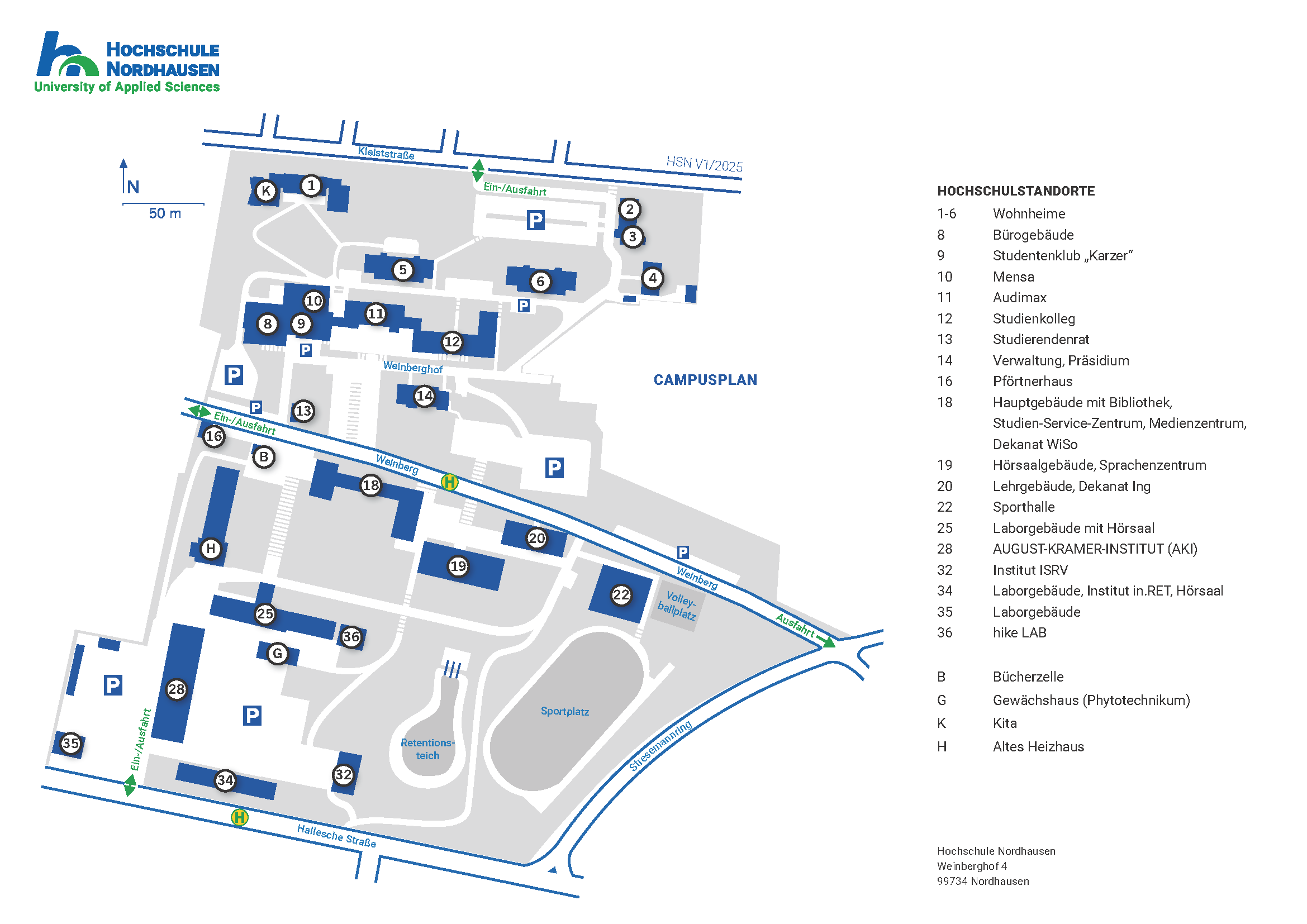
House 18, Level 1, Room 18.0105