

 Photo: Tina Bergknapp / Nordhausen University of Applied Sciences


4 September 2026
Nordhausen, 4 September 2026 – Sometimes a single event is enough to throw a degree programme into disarray: a serious illness in the family, money that suddenly runs out, or a bout of depression from which it is impossible to recover on one’s own. Since 2021, Nordhausen University of Applied Sciences has had a support service for such moments. The University Social Services (HSA) supports students through difficult periods in their lives – confidentially, without red tape and independently of the student administration. At the end of the year, ministerial funding for this service will come to an end. This puts at risk a support system that has proven its worth over the years – and for which demand has recently risen more sharply than ever before.
Photo: Tina Bergknapp / Nordhausen University of Applied Sciences
What is university social work?
University social work is a counselling and support service for students who find themselves in difficult circumstances. It provides support with mental health issues such as exam anxiety, feeling overwhelmed or periods of depression, with financial difficulties, with questions regarding the organisation of their studies, and during personal crises. The service is outreach-based, easily accessible, confidential and independent of the academic administration. Students can get in touch without their concerns affecting their exams or the progress of their studies – an important point, as it is precisely the worry that personal problems might be recorded on their academic file that prevents many from seeking help.
„The sooner students reach out to the HSA, the sooner we can work together to find solutions, and the sooner we can help alleviate stress and feelings of pressure. It also means that students can be referred more quickly to the appropriate specialist service. By making the process accessible without fear, there are fewer barriers for students to open up about often very sensitive issues to people who are, after all, relative strangers, and to seek help,“ says Conny Sander, Head of University Social Work.
Who is behind this offer?
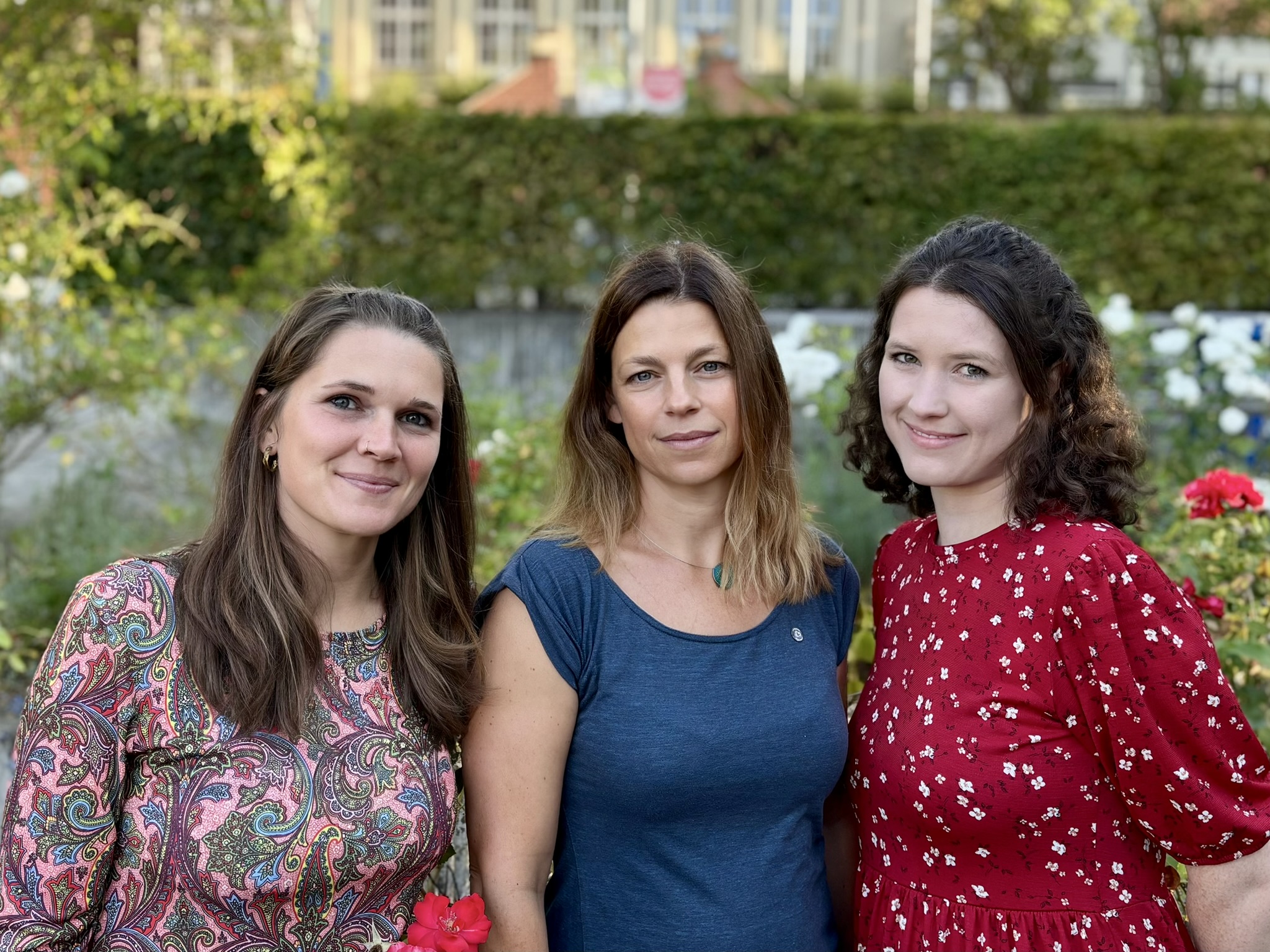
The HSA is run by three colleagues with different areas of expertise. Conny Sander heads up university social work; a qualified educationalist, she is responsible for administrative and operational tasks and is a learning coach and coach accredited by the German Coaching Association (DGfC). Marie-Therese Weber is a university social worker; she studied Social Work (BA), works as a systemic counsellor and is involved in the day-to-day counselling service. Ines Jahne is a research assistant with a Master’s degree in Social Work and is responsible for internal evaluation and public relations.
The HSA is well connected within the university and works closely with a wide range of internal departments. If a matter goes beyond the scope of university social work, the team refers it to external specialist services – such as private psychotherapists, the Social Psychiatric Service (SpDi), the psychiatric department at the Südharz Klinikum, the BAföG office and the General Social Counselling Service run by the Studierendenwerk, the Immigration Office or the housing association.
How the HSA works in practice
We have deliberately kept the process of accessing counselling simple. Students can contact the team by email, via a messaging app or during consultation hours – some simply turn up at the door on campus. If they wish, they can make contact anonymously by email. In a confidential conversation, we work together to clarify exactly what the problem is and what the next steps should be to help. Some people only need a single session for guidance, whilst others receive support over a period of weeks or months. The counsellors listen, help to sort things out, put people in touch with relevant resources and assist in regaining a sense of control when several problems arise at once.
Our own figures show that this support often continues for some time: in 47 per cent of cases, the initial contact is followed by a second meeting; in 31 per cent, there are up to four contacts; and in 22 per cent, the HSA supports students over a longer period.
A real-life example illustrates just how complex these issues can be: the focus of a counselling session is an international student who is going through a particularly stressful phase of their studies. In addition to psychosocial pressures such as stress, homesickness and the mounting pressure of academic life, a limited command of German also plays a significant role. The language barriers make exam preparation particularly difficult and lead to a fall behind in studies. At the same time, the length of the course is causing considerable pressure from the student’s family.
Another challenge was the imminent completion of his Bachelor’s thesis, which had to be written in German. The student needed support in structuring his learning and work process – in setting priorities, organising his studies and selecting suitable learning methods. Added to this were legal and administrative issues relating to visas and residence permits, the renewal of which was linked to academic performance. Questions regarding translations and the recognition of qualifications, the blocked account, and communication with the Immigration Authority also caused further uncertainty. When a technical data loss was added to the mix, the question of a possible extension to the deadline arose. Through the counselling, the student was supported in sorting through the various challenges, developing solutions and regaining confidence in taking action – the support continued right up to the final examination.
This example illustrates that university social work goes far beyond traditional student advisory services: It takes a holistic view of students’ lives, combining psychosocial support with practical assistance in tackling academic, language and social challenges, thereby helping to ensure academic success even in difficult life circumstances.
Who this offer is for
The HSA is open to all students at Nordhausen University of Applied Sciences – regardless of their degree programme, semester or background. It is particularly important for those who have to cope with stressful circumstances alongside their studies: health problems, financial difficulties, caring for family members, or the challenge of settling into a new town or country. The practical benefits are clear: those who seek support early on are more likely to find a way to continue their studies rather than drop out.
Progress since the start of the project
Since its launch in November 2021, demand for university social work has grown significantly. During the first project phase, which lasted just two months, there were 19 counselling sessions; in 2022, the figure had already risen to 147; and in 2023, it stood at 94. Since the team began working with a new line-up and an increased number of hours in September 2024, the figures have risen noticeably once again: to 163 counselling sessions in 2024 and 375 in 2025. By August 2026 alone, 344 consultations had already been recorded. In total, the HSA has carried out 1,182 consultations since its inception.
In addition, there are outreach activities through which the HSA actively engages with students – for example, at events or on campus. Here, too, the growing reach is evident: from 156 contacts in 2024, to 1,313 in 2025, and up to 1,390 between January and August 2026 alone.
„The issues raised by those seeking advice have remained more or less the same since 2021. For example, almost 40 per cent of those seeking advice continue to turn to the HSA’s support service due to mental health issues – based on the comparison periods 2021 to 2023 and 2024 to 2026. Issues such as social isolation, social anxiety and feeling overwhelmed are common focal points in counselling. Furthermore, over the last two years, financial challenges and concerns raised by international students have been recorded twice as frequently,“ reports Ines Jahne, who is responsible for the internal evaluation.
Why this issue is important beyond Nordhausen
The mental health of young people has become noticeably more important in recent years. Students are among the groups that report particularly high levels of stress, feeling overwhelmed and anxiety about the future – a finding that is directly reflected in the HSA’s counselling figures.
At the same time, the region has a vested interest in students successfully completing their degrees. Those who do well in their studies in Nordhausen are more likely to stay in the area and become skilled workers in a region that relies on a supply of qualified young talent. University social work thus operates at the intersection of two issues that extend far beyond the university itself: the health of young people and securing a skilled workforce in the region.
The unresolved issue of continued funding
The HSA is currently funded by the Thuringian Ministry of Education, Science and Culture (TMBWK). This funding is due to expire on 31 December 2026, and follow-on funding has not yet been secured. This puts at risk a service that has proven its worth over many years and whose discontinuation would leave students in difficult life situations without a reliable point of contact. Given the sharply rising demand and the demonstrable impact of the service, this would be a loss that would extend far beyond the individual students.
What HSA and the university are already doing
The team and the university management are working on several levels to ensure that the programme continues. To secure follow-on funding, external funding is being sought and grant applications are being submitted. At the same time, the university is seeking dialogue with political representatives – locally with the district administrator and the district council political groups, as well as in the Thuringian State Parliament, where the coalition parties have been approached. In addition, discussions are taking place with the Student Services Organisation and with the two relevant ministries – the Ministry of Education and Science and the Ministry of Health and Social Affairs.
This is accompanied by an intensified public relations campaign: the HSA is raising awareness of its work and evaluation results via social media channels such as LinkedIn and Instagram, has appeared as a guest on Radio ENNO, and is preparing for an appearance on MDR. Students and teaching staff have also launched a video campaign, complemented by a Sharepic campaign. The fact that so many people are getting involved highlights just how important this initiative is to the university community.
How you can help
Anyone wishing to support university social work can do so with very little effort: simply signing the petition to retain the service helps to lend weight to the cause and ensure that students in Nordhausen continue to have a reliable point of contact. The petition can be found here: https://weact.campact.de/petitions/rettung-der-hochschulsozialarbeit-hsa-der-hs-nordhausen
Share:
Technical employee
+49 3631 420-151
Building 12 (ground floor)
Head of University Marketing
+49 3631 420-113
Building 12 (ground floor)
Inclusion officer, website administrator / technical management
+49 3631 420-114
Building 11, Room 11.0105
You are currently viewing a placeholder content from Instagram. To access the actual content, click the button below. Please note that doing so will share data with third-party providers.
More InformationYou are currently viewing a placeholder content from YouTube. To access the actual content, click the button below. Please note that doing so will share data with third-party providers.
More Information


Study Service Centre
+49 3631 420-222
House 18, Level 1, Room 18.0105